July on the Mesh: A Coverage Drop, a Silent Router, and Numbers That Don't Agree
This month's numbers come with an asterisk. NEPAMesh runs two dashboards that both report network size, and this time they don't agree. Chasing down why led us to a router that's gone quiet and a second one running too weak to do its job, both in the same corner of the network.
By the Numbers
All data pulled as of this writing.
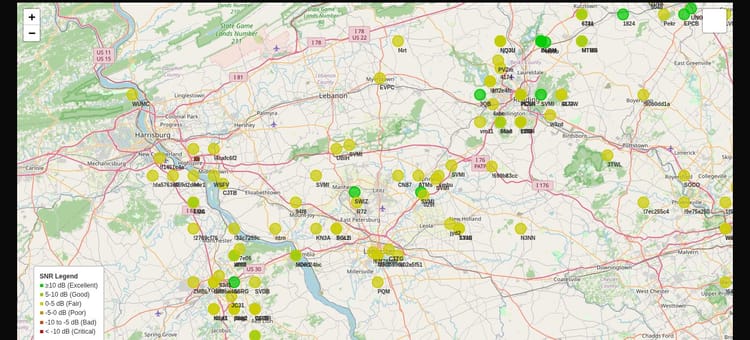
map.nepamesh.com reports 817 total registered nodes, with 279 active in the last 24 hours (34% of the network, up from 24% earlier this month). propagation.nepamesh.com reports 2,480 total nodes and 218,856 total position records, with 308 active in the last 48 hours.
Those two totals still don't agree, and that gap hasn't closed even as both numbers ticked up. What did move, on both dashboards, is the share of the network actually active: map.nepamesh.com's active share climbed from 24% to 34% of registered nodes over the same stretch. That's a real, encouraging trend. It just hasn't reached the two nodes we were watching most closely, which is the rest of this update.
We also ran our own direct check. Monitoring NEPAMesh's public LongFast channel for six straight hours caught 780 packets from 135 distinct nodes actually transmitting, with average signal quality across that sample at -106.1 dBm RSSI and -13.0 dB SNR. That's a real, verified sample, not a database total, and it's the number we're most confident in this month.
The BMBF Coverage Drop
The reason we went looking in the first place: the Discord-to-mesh bridge bot that depends on the BMBF area has gotten unreliable, and reports from that area described trouble getting messages in and out at all.
Rather than guess, we monitored the mesh directly over a series of listening sessions, each longer than the last: five minutes, twenty minutes, an hour, three hours, and finally the full six-hour session behind the numbers above. The logic is simple. A node that's actually transmitting shows up eventually, even on a quiet channel. A node that's actually down doesn't, no matter how long you wait.
Two routers were the focus: Sandworm and Chani, both nodes the BMBF area is expected to depend on to reach the rest of the mesh.
Sandworm never appeared. Across six hours and 780 packets from 135 other nodes, Sandworm's ID showed up zero times, not as a position update, not as telemetry, not as a routine identity broadcast. That's not proof by itself, but six hours of silence against that much surrounding traffic is a strong signal. Sandworm should be treated as down until someone checks it directly: power, antenna connection, whether the board is even booting.
Chani is alive, but barely. It showed up twice, once on telemetry and once on a routine identity broadcast, so the radio is powered and still on the mesh. But both packets arrived around -111 dBm with a signal-to-noise ratio near -16.75 dB, close enough to the noise floor that whatever gateway caught them was working hard to pull the packet out at all. A link that marginal drops most of what's actually sent. Chani being "up" doesn't mean Chani is doing its job as a router right now.
Put those two together and the effective path between the BMBF area and the rest of the mesh has collapsed down to something close to nothing, even though neither node shows an obvious total failure on paper. That matches what's been reported: not a hard outage where nothing happens, but a connection that feels like it's fighting to get in and out.
This route used to work better, and that part didn't have an explanation yet, at least not until we checked on-site.
Found It: A Loose Connector and a Cat
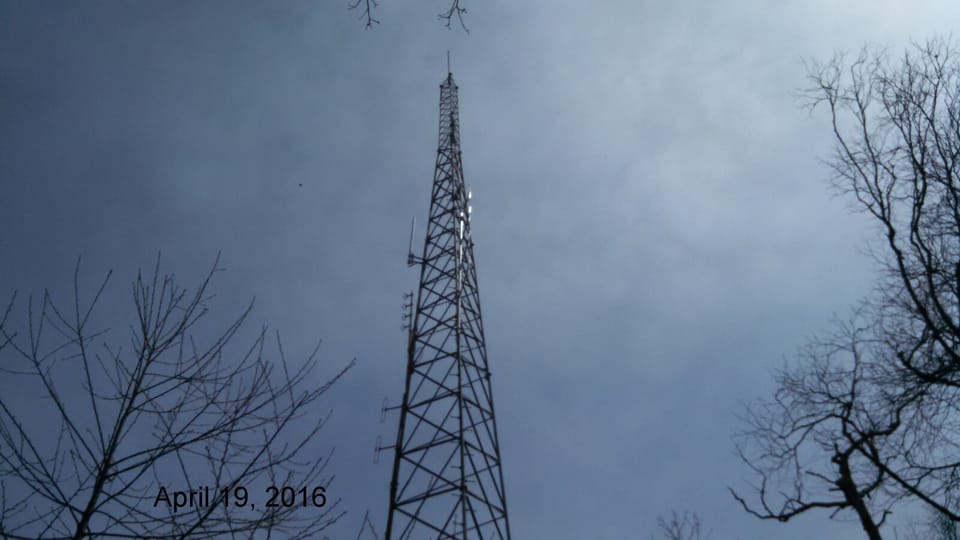
BMBF is the gateway the whole area leans on to reach the rest of the mesh, and its antenna connection had come loose. The timeline lines up with when things started getting worse. The culprit, caught in the act on July 14, was an unusually energetic kitten with a strong interest in cables it had no business touching.
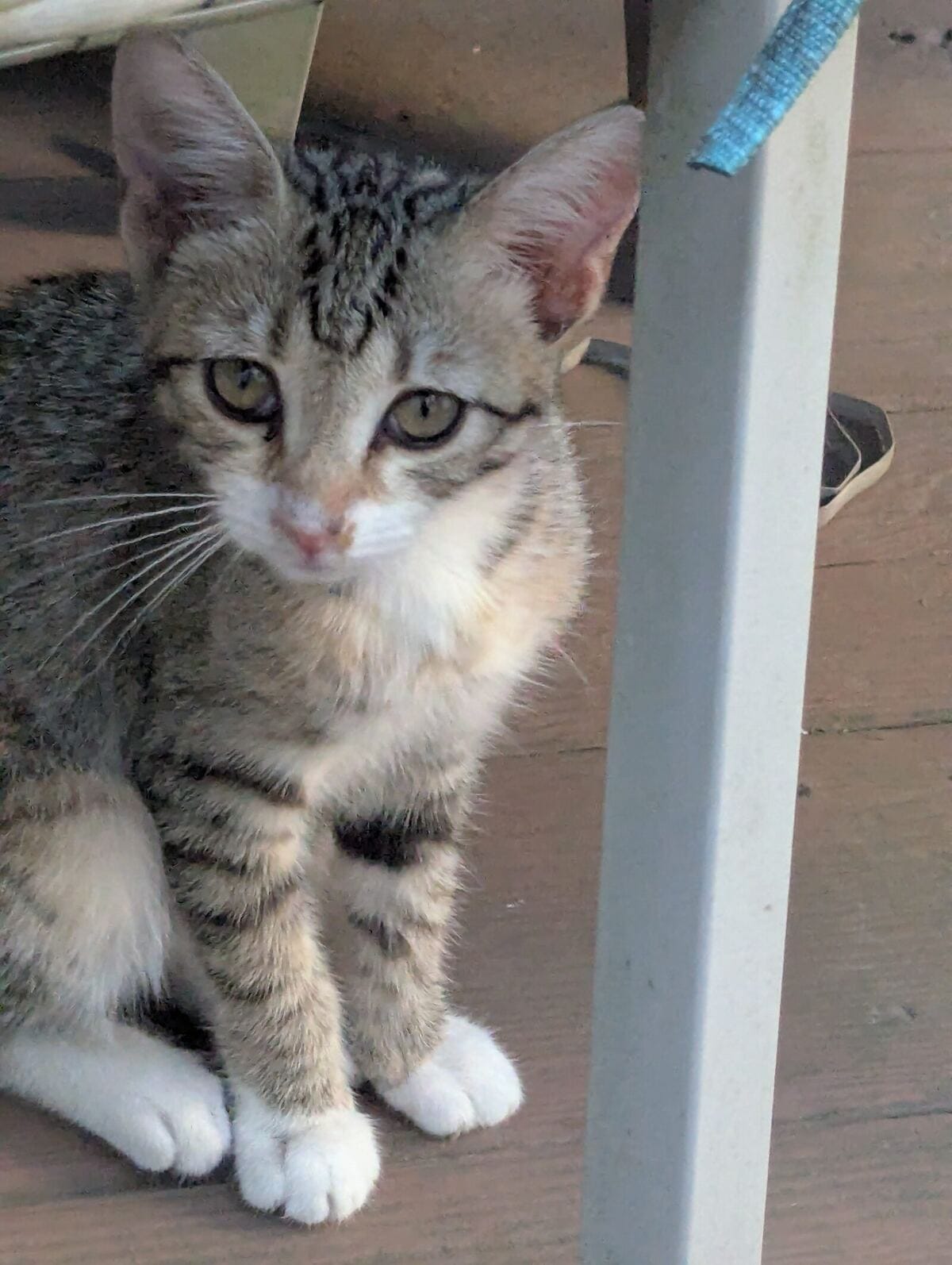
A loose connector at BMBF explains both symptoms at once. Chani transmitting fine but arriving at -111 dBm makes sense if the antenna hearing it is only partially seated instead of fully disconnected. Sandworm never appearing at all makes sense if BMBF is the primary path back to the mesh for that node and a bad connection dropped it below the floor entirely, whether or not Sandworm itself was ever the problem.
The connector got reseated and secured. We expected that to be the end of it.
The Reseat Didn't Fix It
After the antenna was reseated, we ran the same direct monitoring approach again: four straight hours, watching specifically for Sandworm and Chani by their exact node IDs. The result was worse than before the fix, not better. 692 packets from 149 distinct nodes came through, and neither Sandworm nor Chani appeared even once. Before the reseat, Chani had at least shown up twice in a comparable window. After it, nothing from either node.
That rules out the tidy version of this story. A loose connector at BMBF was real, and reseating it was worth doing regardless, but it wasn't the whole explanation for what's happening to Sandworm and Chani specifically. Something else is going on, and right now we don't know what.
There is one piece of better news alongside this. The network's own dashboards show active-node participation climbing noticeably over the same period, from roughly 24% of registered nodes active in a day up to 34%. That's a real improvement somewhere in the network. It just isn't showing up as a fix for these two nodes.
What's Coming
The investigation stays open. Next up is checking Sandworm and Chani independently of the BMBF connector theory: confirm Sandworm has power and is transmitting anything at all, and check whether Chani's antenna, mount, or line of sight changed separately from the connector issue at the gateway.
If you're in the BMBF area, this means the connection problems you've been seeing likely haven't resolved yet, even with the antenna work done. Say so in the Discord either way, better or the same, so we know what's actually happening on the ground and not just what the monitoring shows.
More on this, and the rest of July, once we know more.
NEPAMesh is a community Meshtastic network covering Northeastern Pennsylvania's Wyoming Valley. Live map at map.nepamesh.com. Questions in the Discord.
Meshtastic is a registered trademark of Meshtastic LLC. No warranty is provided. Use at your own risk. This post is not endorsed by or affiliated with Meshtastic LLC.