M5Stack Cardputer Review: A Meshtastic Node Owner's Take
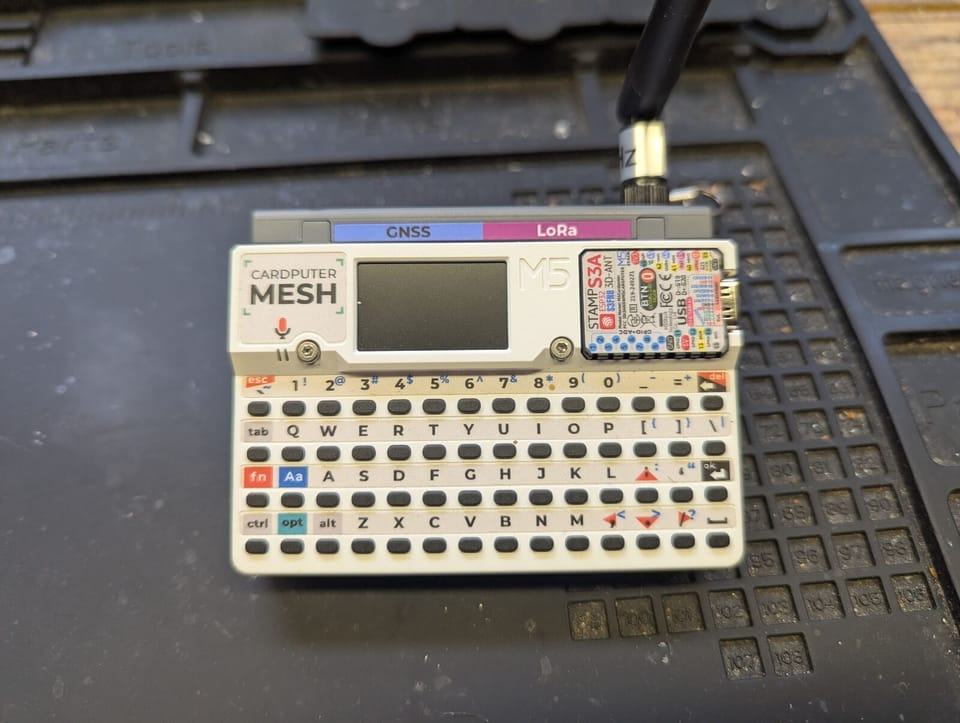
The M5Stack Cardputer keeps showing up in Meshtastic circles as a portable, keyboard-equipped node option, so it was worth putting real hours on one and writing down what actually held up. Here's where it earns its spot in a bag and where it still needs work.
Specs at a glance: ESP32-S3 running the Meshtastic firmware, LoRa radio via an add-on SX1262 module that also carries GNSS, 1.14" LCD, full QWERTY keyboard, built-in battery.
The Good
Form factor. The Cardputer is genuinely pocketable. It's smaller than most phones, and the clamshell-adjacent design (screen up top, keyboard below) makes it feel like a purpose-built communicator rather than a dev board someone bolted a keyboard onto. For a field radio you actually carry, size matters, and this one gets it right. Screen, keyboard, and battery all live in the same enclosure, so there's no separate battery pack or case to keep track of.
Needs Improvement
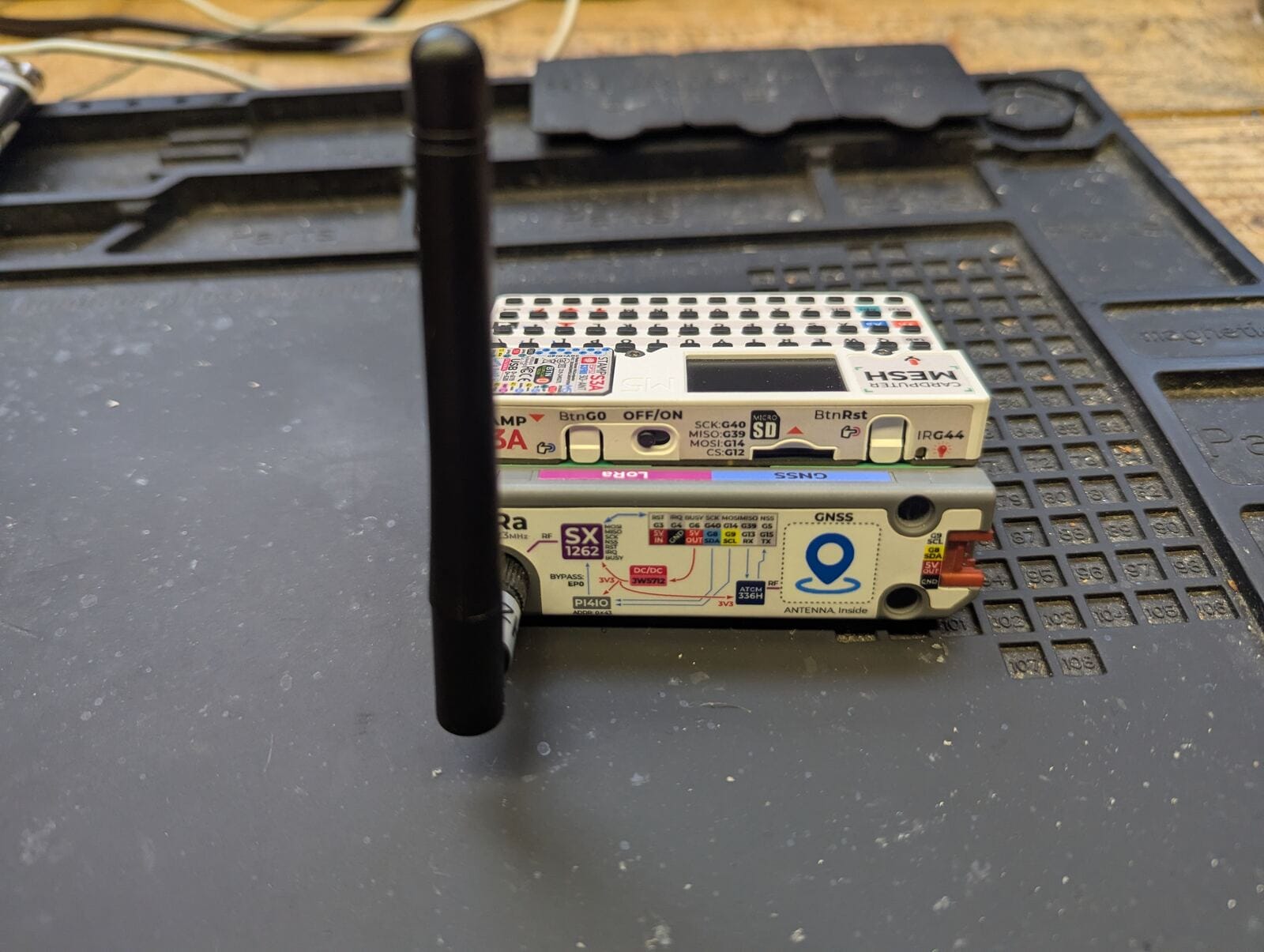
The radio isn't actually built in. The Meshtastic firmware runs on the Cardputer's own ESP32-S3. What it doesn't have on board is a LoRa radio: that comes from an SX1262 module that plugs into the GPIO header on top of the unit and is what actually lets the Cardputer speak LoRa. The module itself works well, but calling the whole setup self-contained overstates what you're actually carrying, since the radio is a separate piece sitting on top rather than part of one integrated package. The fix is already there if you look for it: the module's screw holes line up with the case, so swapping in slightly longer screws for the stock ones locks it to the body. The answer was found buried in a Reddit thread, not in anything from M5Stack. A community post is not a substitute for official support, and this is exactly the kind of thing a manufacturer's own documentation should cover.
Documentation is the biggest problem. The single most frustrating part of ownership wasn't the hardware, it was figuring out how to charge it. It took several failed attempts before the reason became clear: the device has to be powered on to charge fully. Plug it in while off and it will trickle charge or stall out well short of full. This isn't buried in fine print somewhere, it's just not documented anywhere obvious. A one-line note in the box or the official quick-start guide would have saved a lot of wasted charging cycles.
Small keyboard, big fingers. The keyboard is the whole reason to buy this device over a screen-only node, and it mostly works, but the key pitch is tight enough that typos are frequent for anyone without small hands. Short messages and channel names are fine. Longer typed exchanges get tedious fast.
Battery life is average at best. Fully charged, the Cardputer runs about 6 to 8 hours in normal use. That's workable for a day out but not much more, and it's the one spec where the hardware choice shows. A more power-efficient processor would likely stretch that number without giving up anything else the device does well.
The Verdict
The Cardputer nails the part that's hardest to fake: the base unit feels like a finished product instead of a hobbyist rig. Form factor is a real strength, and if the documentation gap around charging gets fixed, the out-of-box experience gets a lot better overnight. The add-on LoRa module, battery life, and keyboard size are trade-offs worth knowing about before it's your daily carry node.
NEPAMesh is a community Meshtastic network covering Northeastern Pennsylvania's Wyoming Valley. Live map at map.nepamesh.com. Questions in the Discord.
Meshtastic is a registered trademark of Meshtastic LLC. No warranty is provided. Use at your own risk. This post is not endorsed by or affiliated with Meshtastic LLC.