State of the Mesh: NEPAMesh by the Numbers

I pulled the data from map.nepamesh.com and tapped into the MQTT server to see what's actually going on with the mesh. Figured it was time to take stock of where we're at. Spoiler: it's bigger than I expected.
All data in this post is from a live pull on April 1, 2026. If you're reading this later, the numbers have probably changed. Check map.nepamesh.com for the current picture.
The Big Numbers
337 nodes. That's how many devices the network knows about. Of those, 246 have been active in the last 24 hours -- that's a 73% active rate. The other 91 are sitting in someone's drawer or lost behind a couch cushion.
The network processed 19,292 packets with a 100% success rate, which is either impressive or suspicious depending on how cynical you are. Average RSSI across the mesh is -98.9 dBm with an average SNR of -8.3 dB. Not great, not terrible. LoRa does its best work in the margins.
Three gateway nodes are feeding data to the map server. That's three internet-connected nodes bridging the RF mesh to MQTT so the rest of us can see what's happening. More on those later.
What's Everyone Running?
The hardware breakdown tells a story. RAK and Heltec dominate, with a healthy showing of PORTDUINO nodes (Linux boxes, usually Raspberry Pis) running the infrastructure backbone.
| Hardware | Count | Notes |
|---|---|---|
| RAK4631 | 89 | Community favorite. nRF52 power sipper. |
| Heltec V3 | 81 | Budget king. ESP32-S3 based. |
| Heltec V4 | 49 | The newer model gaining ground. |
| PORTDUINO (Linux) | 20 | Always-on infrastructure nodes. RPi etc. |
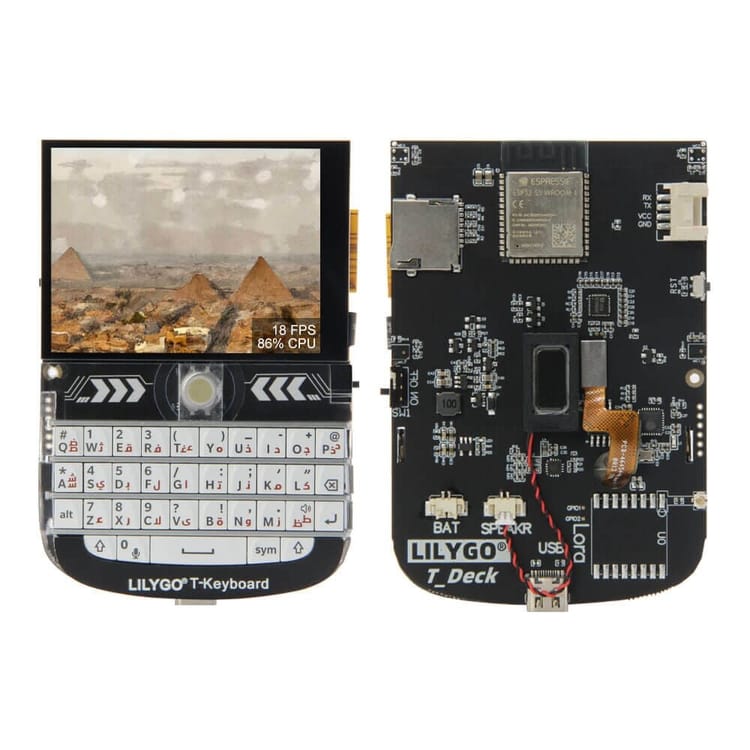
| T-Deck | 12 | The keyboard crowd. |
| T-Beam | 12 | OG Meshtastic hardware. |
| Mesh Node T114 | 11 | nRF52, ultra low power. |
| Tracker T1000-E | 9 | Credit card sized. |
| Seeed Wio Tracker | 8 | Affordable tracker option. |
| T-Beam S3 Core | 8 | Updated T-Beam. |
| Seeed Solar Node | 6 | Solar powered deployments. |
| Station G2 | 5 | Base station setups. |
| Various others | ~27 | Including a RESERVED_FRIED_CHICKEN. No comment. |
RAK and Heltec together make up over half the network. The 20 PORTDUINO nodes are punching well above their weight -- those are the always-on Linux boxes that tend to be the serious infrastructure. If you see a node with 30 neighbors, it's probably a Pi on a mountaintop.
Node Roles
Most people are doing it right: 225 nodes set to CLIENT, which is the recommended default. 48 running CLIENT_BASE for paired setups, 44 on CLIENT_MUTE for listen-only. Only 13 routers and 4 late routers, which is about the right ratio.
| Role | Count | What It Means |
|---|---|---|
| CLIENT | 225 | Default. Smart relay behavior. |
| CLIENT_BASE | 48 | Prioritizes own paired devices. |
| CLIENT_MUTE | 44 | Listen only. Never relays. |
| ROUTER | 13 | Dedicated relay nodes. |
| ROUTER_LATE | 4 | Router with delayed rebroadcast. |
| ROUTER_CLIENT | 2 | Hybrid router/client. |
| TRACKER | 1 | Position tracking only. |
The Gateways
Three nodes are doing the heavy lifting of bridging RF traffic to MQTT:
wi3w-base (!24da43f9) - PORTDUINO - 1,760 packets/24h
The absolute workhorse. This node alone handles more gateway traffic than the other two combined by a factor of three. It's the spinal cord of the network's internet bridge.
BottyMcBotface (!75e98740) - 605 packets/24h
Great name. Solid throughput. This one's a Discord backhaul -- it bridges mesh traffic to Discord so people without hardware can follow the mesh live. Handy if you're curious about the network but haven't grabbed a node yet.
Meshtastic 7aac (!9e757aac) - 5 packets/24h
Barely contributing, but every bit counts. Could be a node with intermittent connectivity or someone's home setup that only catches nearby traffic.
Distance Records: The Good Stuff
This is what everyone wants to know. Here are the longest verified single-hop RF links on the NEPAMesh network. No internet relay, no MQTT bridge -- pure radio.
| Distance | From | To | Avg SNR | Miles |
|---|---|---|---|---|
| 127.5 km | Bears Head (W3TWA) | MountHollyRptr | -13.8 dB | 79.2 mi |
| 104.1 km | Bears Head (W3TWA) | York (W3HZU) | -9.1 dB | 64.7 mi |
| 79.2 km | !22b35655 | Vinemont1100 | -16.9 dB | 49.2 mi |
| 74.1 km | Bears Head (W3TWA) | lvmesh.com k3ntr | -18.0 dB | 46.0 mi |
| 63.8 km | Vinemont1100 | KC3WRY Red Lion | -9.6 dB | 39.6 mi |
| 58.8 km | !22b35655 | Cornwall LRTS | -18.8 dB | 36.5 mi |
| 57.3 km | Bears Head (W3TWA) | LVSN Outdoor | -5.1 dB | 35.6 mi |
The Bears Head node is carrying the distance game. Sitting at 2,145 feet elevation with the SUSQ VAL PA Mesh crew, it can see 30 neighbors and holds the top spot at 79.2 miles to MountHollyRptr. That's mountain-to-mountain line of sight doing what it does best.
For context, the world record for Meshtastic is 206 miles. Our local best of 79 miles is nothing to sneeze at -- especially on stock power with the 915 MHz ISM band.
Best Connected Nodes
These are the nodes with the most direct RF neighbors. More neighbors means more coverage and more relay paths for the mesh.
| Node | Neighbors | Hardware | Altitude |
|---|---|---|---|
| SVPM - W3TWA - Bears Head | 30 | PORTDUINO | 2,145 ft |
| wi3w-base | 30 | PORTDUINO | -- |
| SVPM - York - W3HZU | 21 | PORTDUINO | -- |
| Geist Solar | 16 | RAK4631 | -- |
| SVPM - Cornwall - LRTS | 15 | PORTDUINO | 1,178 ft |
| Vinemont1100 | 14 | RAK4631 | 1,099 ft |
| KC3WRY (Red Lion) | 13 | RAK4631 | 1,099 ft |
| Sandworm | 13 | RAK4631 | 1,624 ft |
Pattern is clear: elevation wins. The top connected nodes are all on hilltops or mountains. The SUSQ VAL PA Mesh operation deserves a shoutout -- they have PORTDUINO nodes scattered across Bears Head, Reading, York, Cornwall, New Holland, Scranton, and Manheim. That's serious distributed infrastructure spanning central and eastern PA.
Bonus: There's a Weather Bot
While listening to MQTT traffic, I caught something cool. MrMeshBot is running an automated NOAA weather alert system. It's broadcasting Susquehanna River flood stage data directly to the mesh.
Sample message pulled from MQTT:
"NWPS ALERT 1/2 -- The Susquehanna River at Wilkes
Barre is currently in no_flooding stage at 8.15 feet
with a flow of 28000 cfs. --- Impact: none ---
Projected to be in normal stage at 9.3 feet by
Thu Apr 2 02:00:00 2026."
This is the kind of thing that makes mesh networking more than a hobby. When the power goes out and cell towers go dark, having real-time flood data on an off-grid radio network is genuinely useful. Especially in NEPA, where the Susquehanna has a habit of reminding us who's boss.
Geographic Coverage
The network covers northeastern PA (the NEPA in NEPAMesh) and extends south through the Lehigh Valley, Pocono, and Susquehanna corridor. Tendrils reach into central PA through the York/Lancaster area and the Susquehanna Valley. The center of mass sits firmly in the Lehigh Valley / Pocono region.
336 of 337 nodes have GPS positions. Altitude ranges from sea level to 2,145 feet.
What's on the Air?
Breakdown of the 19,292 packets processed in the last 24 hours:
| Packet Type | Count | What It Is |
|---|---|---|
| POSITION_APP | 1,404 | GPS location updates |
| TELEMETRY_APP | 551 | Battery, voltage, sensors |
| NODEINFO_APP | 328 | Node identification broadcasts |
| TRACEROUTE_APP | 49 | Path discovery |
| TEXT_MESSAGE_APP | 22 | Actual human conversations |
| ROUTING_APP | 9 | Mesh routing updates |
| STORE_FORWARD_APP | 7 | Offline message delivery |
Position and telemetry dominate, which is normal for a mesh this size. 22 text messages in 24 hours means people are actually using it to talk, not just staring at dots on a map. The 7 store-and-forward packets are interesting -- that means someone's running an S&F server so offline nodes can get messages when they come back.
So Where Are We?
337 nodes. 79-mile record link. A weather bot. Nodes on mountaintops running solar. A mesh that covers most of eastern PA with real, working, off-grid communication.
A year ago this was a handful of people with Heltecs in their windows. Now it's a legitimate network. The SUSQ VAL PA Mesh crew built out serious infrastructure across central PA. The Lehigh Valley and Pocono nodes fill in the gaps. And every new node someone adds makes the whole thing better.
If you're in NEPA and you're not on the mesh yet, now's a good time. Grab a node, flash it, and join the map. The getting started guide is on the site.
And if you're the person running RESERVED_FRIED_CHICKEN -- I have questions.
Useful Links
- NEPAMesh Map: map.nepamesh.com
- NEPAMesh Discord: (link on nepamesh.com)
- Getting Started Guide: nepamesh.com
- Meshtastic Project: meshtastic.org
Meshtastic is a registered trademark of Meshtastic LLC. Meshtastic software components are released under various licenses, see GitHub for details. No warranty is provided - use at your own risk. The Meshtastic logo trademark is the trademark of Meshtastic LLC. This post is not endorsed by or affiliated with Meshtastic LLC.